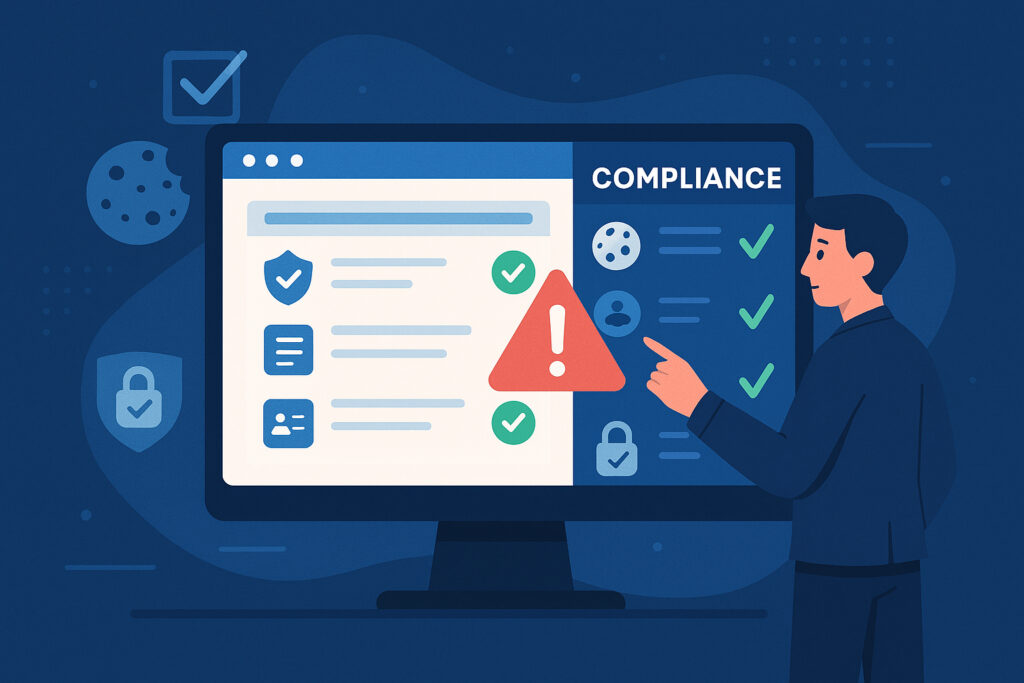
I remember talking to a client who proudly showed me their compliance audit report from six months earlier. Everything looked perfect on paper – all the checkboxes ticked, all requirements met. Then I looked at their live website. Their privacy policy link was broken, their cookie consent banner wasn’t working properly, and their SSL certificate had expired two weeks ago. The audit was right when it was done, but the digital world doesn’t stand still.
That’s the fundamental problem with one-time compliance audits. They’re snapshots of a single moment, but your website is a living, breathing thing that changes constantly.
The False Security of a Single Audit
When you commission a compliance audit, you get a comprehensive report that makes you feel secure. And you should feel good about it – for about five minutes. Because the moment that audit is complete, your website starts drifting away from that perfect state.
Someone updates a plugin. A developer pushes a quick fix. Marketing changes a landing page. IT renews a certificate but forgets to update the configuration. Each of these seemingly innocent actions can introduce compliance issues that nobody notices until it’s too late.
The regulatory landscape doesn’t help either. GDPR, accessibility requirements, consumer protection laws – they’re not static documents. They evolve, get clarified through case law, and expand their reach. That audit you did last year? It might have checked all the boxes for 2023’s requirements, but what about the updates that came in 2024?
The Hidden Costs of Compliance Gaps
Here’s what actually happens in the real world. A company does their annual compliance audit, fixes everything, and moves on. Three months later, a customer files a complaint because the cookie consent isn’t working properly. The company scrambles to investigate, discovers multiple issues that cropped up after the audit, and now faces potential fines and reputational damage.
The financial impact goes beyond direct penalties. You’ve got:
Emergency fixes that cost three times more than planned maintenance. Legal consultations to understand your exposure. Customer service dealing with complaints and concerns. Lost business from customers who don’t trust a site that looks sloppy about compliance.
I’ve seen businesses spend tens of thousands fixing problems that would have cost a few hundred to prevent with continuous monitoring.
What Changes Between Audits
Let me be specific about what breaks. Your privacy policy might be perfectly written, but if the link returns a 404 error, you’re non-compliant. Your cookie consent banner might be installed, but a theme update could break the JavaScript. Your security headers might be configured correctly, but a server migration could wipe those settings.
Content management systems like WordPress receive updates constantly. Plugins update. Themes update. Hosting environments change. Each update is a potential point of failure for compliance elements.
Then there’s human error. Someone adds a new contact form and forgets to include proper consent mechanisms. Marketing embeds a third-party tool that sets cookies without proper disclosure. A developer removes what looks like ”unnecessary code” that was actually handling GDPR requirements.
The Shift to Continuous Monitoring
The solution isn’t more frequent audits – it’s continuous monitoring. Think of it like the difference between getting an annual health checkup and wearing a fitness tracker. Both have value, but one gives you real-time awareness that lets you catch problems immediately.
Automated compliance monitoring checks your site daily or even hourly for:
Whether required legal documents are accessible, if cookie consent mechanisms are functioning properly, SSL certificate validity and configuration, security header implementation, accessibility statement availability, and proper display of business identifiers.
This isn’t about replacing human expertise. It’s about using technology to maintain the standards that experts establish during those deeper audits.
Building a Modern Compliance Strategy
Start with a comprehensive audit – you need that baseline. But then layer continuous monitoring on top. When something breaks, you get notified immediately with specific details about what’s wrong and where.
The monitoring should be intelligent enough to understand context. A 503 error during planned maintenance is different from a mysteriously broken privacy policy link. Good systems know the difference and alert you accordingly.
You also want monitoring that grows with regulatory changes. When new requirements emerge, your monitoring should adapt to check for them without you having to remember to update your manual checklist.
Common Questions About Continuous Monitoring
Won’t this generate too many alerts? Only if it’s configured poorly. Good monitoring distinguishes between critical issues and minor concerns, and learns your site’s patterns to reduce false positives.
Can automated monitoring replace legal review? No. It catches technical implementation problems, but you still need qualified professionals to review your policies and ensure they meet legal standards.
How quickly do issues typically appear? In my experience, most monitored sites encounter at least one compliance-related issue per quarter. Without monitoring, these often go unnoticed for months.
What about small businesses – is this overkill? Small businesses actually face proportionally higher risk. You probably don’t have a dedicated compliance team, so automated monitoring becomes even more valuable.
The Bottom Line
One-time audits served us well in an era when websites changed slowly and regulations were simpler. That era is over. Today’s digital environment demands continuous vigilance, and trying to maintain it manually is like trying to watch dozens of security cameras simultaneously – humanly impossible.
The question isn’t whether you need continuous monitoring. It’s whether you can afford the risk of not having it. Because the next compliance issue isn’t a matter of if, but when.