How Regulators Use Automated Scanning to Find Violations
If you run a website that serves EU or Californian users, regulators may already have scanned it, …
Automated Compliance Monitoring

If you run a website that serves EU or Californian users, regulators may already have scanned it, …

If you sell to consumers online, the law expects you to give them a fixed set of …

If your online shop sells to consumers anywhere in the EU, the European Accessibility Act has applied …

The benefit is simple. Done right, a monitoring service turns website compliance from a yearly audit into …

A web team that has never rehearsed a compliance incident usually finds its gaps at the worst …

Online booking and reservation systems sit at a busy intersection of consumer law, data protection, payment security …

Privacy-enhancing technologies have moved from academic papers into everyday web stacks, and anyone running a site with …

Job application form compliance is one of the most overlooked areas of website compliance, even though a …

Compliance sandbox environments let you test cookie banners, legal pages, security headers and tracking changes before real …

Non-profit websites collect some of the most sensitive personal data on the internet – names, home addresses, …

Deleting someone’s personal data when they ask sounds simple until the request arrives and nobody knows where …

Affiliate marketers and influencers publishing sponsored content face a patchwork of disclosure rules that most site owners …

When two companies merge, the website compliance stack rarely gets mentioned in the deal memo – but …
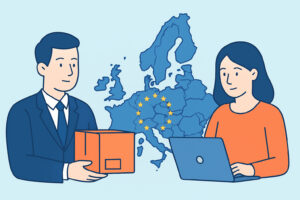
Selling into a second or third EU member state sounds like a simple checkbox on an ecommerce …

PCI DSS enters the conversation the moment a website touches cardholder data – even indirectly, through a …

A website that passed its compliance review in January rarely fails the same way in September – …

Website operators collecting data from users under 13 face a patchwork of overlapping rules – COPPA in …

A regional manager launching a Spanish-language version of a checkout flow often assumes the compliance work is …

Organizations expanding into new markets or facing their first regulatory audit often reach a point where in-house …

Marketing pixels from Meta, Google, LinkedIn, and TikTok fire before most teams realize they’re transmitting personal data …
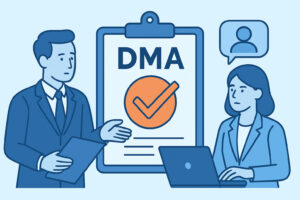
The Digital Markets Act doesn’t just regulate the six companies Brussels named as gatekeepers – it reaches …

Compliance rarely fails all at once – it erodes gradually, one skipped review or one forgotten cookie …

The United Kingdom left the EU’s regulatory orbit on 31 December 2020, but its data protection law …

Membership sites live and die by recurring billing, and that single fact drags in a pile of …

Webhooks and APIs move data continuously between systems, often without anyone outside the engineering team noticing – …

Data Subject Access Requests – DSARs – land in inboxes far more often than most privacy teams …

A misconfigured CORS policy on a checkout page or customer portal doesn’t just risk a security incident …

A university admissions portal, a K-12 school’s parent communication site, and a corporate e-learning platform for onboarding …
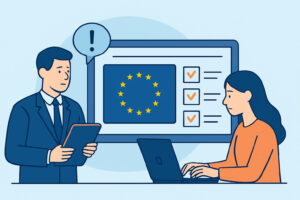
A marketplace operator based in Rotterdam or Hamburg selling third-party goods to EU consumers has almost certainly …

Every GDPR-regulated organization with more than 250 employees – and plenty of smaller ones too, if processing …

Compliance documentation is the difference between a regulator’s inquiry that closes in a week and one that …

Canadian businesses collecting personal information online – whether they’re based in Toronto or simply selling to customers …

Cookie categorization sounds like a simple labeling exercise until a compliance officer actually sits down and tries …

Vendor risk management often gets treated as a procurement checkbox, but for most businesses today it is …

Fintech companies rarely serve just one market anymore – a lending app built in Estonia might onboard …

Compliance officers rarely struggle with finding problems on a website – expired SSL certificates, a cookie banner …

A new site or microsite launch is usually a race against a deadline – design sign-off, content …

Regulators rarely ask why a decision was made in the moment – they ask for proof it …

Healthcare providers, clinics, telehealth platforms, and medical practice websites face a compliance burden that most other industries …

Standard Contractual Clauses, often shortened to SCCs, are the legal mechanism most businesses rely on when personal …

Most website compliance failures don’t start with a hacker or a regulator – they start with an …

Many compliance teams run their audits on a desktop browser, check the boxes, and move on – …
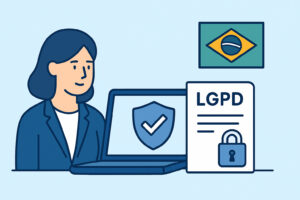
LGPD, Brazil’s Lei Geral de Proteção de Dados, applies to any website that processes personal data of …
Subprocessor lists are the disclosure of every third party that touches personal data on behalf of your …

Compliance for eCommerce – Returns, Refunds and Disclosures Running an online store means eCommerce compliance around returns …

Marketers who manage website content often encounter Content Security Policy directives when something they’ve added suddenly stops …

DPO responsibilities for mid-sized businesses online go far beyond appointing someone to handle data requests – they …

The EU AI Act introduces direct compliance obligations for websites that use machine learning features – and …

Third-party scripts and compliance represent one of the most underestimated risk areas in modern web operations.

Compliance for SaaS companies presents a distinct set of challenges that traditional brick-and-mortar businesses rarely face.
Data processing agreements are a legal requirement that many websites quietly overlook – often because operators assume …

Pre-selected internal links: 1. /cookie-consent-monitoring-beyond-visual-verification/ – directly relevant to CCPA opt-out and cookie consent technical compliance 2. …

Choosing the right compliance monitoring tools is a decision that carries real consequences for your website’s legal …

Real-time compliance monitoring is the practice of continuously checking your website for legal, technical, and regulatory issues …

Automated compliance monitoring is the practice of using technology to continuously check whether a website meets its …

Building a compliance-first brand requires embedding regulatory adherence into every aspect of your digital presence through intelligent …

Website compliance teams often believe that conducting periodic visual checks and ensuring legal documents are present equals …

Website owners and compliance teams are discovering that traditional manual audits can’t keep pace with modern regulatory …

GDPR compliance automation transforms manual, error-prone processes into systematic monitoring that catches violations before they become costly …
Website compliance teams often believe that manual audits and spot checks are enough to maintain regulatory adherence, …

Continuous monitoring creates a foundation of trust that customers can sense even when they don’t explicitly look …
Website owners across industries face mounting pressure to display consumer rights information correctly and consistently.

SSL compliance monitoring has become a cornerstone of comprehensive website security and regulatory adherence for businesses across …
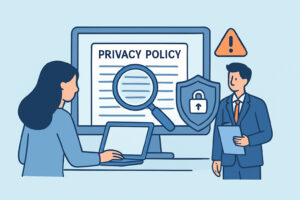
Privacy policy monitoring represents a critical gap in many organizations’ compliance strategies.

Website accessibility statements have become a critical compliance requirement across multiple jurisdictions, yet many businesses remain unclear …

Website owners and compliance teams know that cookie consent monitoring requires far more than simply checking if …

Security header analysis often seems like a technical maze that only developers can navigate, but understanding these …

Manual compliance checking is becoming unsustainable as regulatory requirements multiply and digital touchpoints expand across modern businesses.

Website owners and compliance teams face mounting pressure to maintain regulatory compliance across an ever-expanding list of …
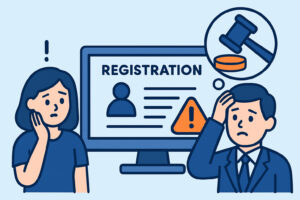
Business registration details might seem like basic housekeeping, but incorrect or missing company information on your website …
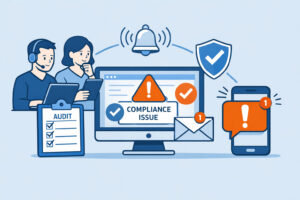
Real-time alerts transform compliance management from a reactive scramble into a controlled, proactive process. If you’re responsible …
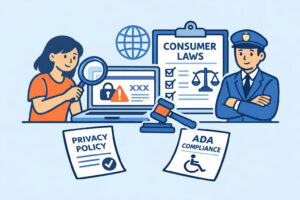
Consumer protection laws increasingly dictate what your website must display – and how it must display it. …
If your privacy policy suddenly disappears from your website, you could be facing legal violations, broken consent …

If you’re responsible for keeping a website compliant – whether that means GDPR, cookie consent, accessibility, or …
If you manage a website for a public sector organization, university, or a larger private company serving …
If you run a website that serves customers — whether it’s an e-commerce store, a SaaS platform, …

If you run a website that handles any user data — logins, forms, payments, even analytics cookies …

If you run any website that handles personal data — and in 2026, that’s nearly every website …

I learned this lesson the hard way about five years ago. A client’s e-commerce site went down …

Every growing business hits a wall with compliance monitoring sooner or later. What worked when you had …

If you’ve ever landed on a website with a cookie banner that looks professional but doesn’t actually …

If your website’s privacy policy, terms of service, or cookie notice went offline right now, how long …

When you’re running a website or managing digital properties for clients, the hidden costs of manual compliance …

Every website changes. Themes get updated, plugins receive patches, developers push new features, and content teams tweak …
You’ve spent hours crafting the perfect privacy policy, had it reviewed by legal experts, and published it …

If you’re responsible for website compliance, you’ve probably clicked through your own cookie consent banner a few …

If you’re running a business website, compliance probably feels like one of those necessary evils – something …

If you’re responsible for a website that handles customer data — or really any business website operating …

If you’re responsible for a website that serves European users, GDPR penalties are not an abstract threat …

If you run a website that collects any form of user data, handles transactions, or simply operates …

If you run a website — whether it’s a small business site, an online store, or a …

Here’s a scenario that’s more common than most website owners realize: your privacy policy page goes down …

If you run a website in 2026, compliance is no longer something you handle once and forget …

If you run a website that collects any form of user data, handles cookies, or operates within …

Here is something that might surprise you. Your website could be breaking consumer protection rules right now, …
Imagine this: it’s Monday morning, you grab your coffee, and your phone starts buzzing.

If you’re running a business website, you’ve probably felt that nagging worry about compliance.

If you’re running a website for your business, you’ve probably spent considerable time worrying about privacy policies, …
If you’ve ever clicked “Accept All Cookies” on a website just to make the banner disappear, you’re …
I remember talking to a client who proudly showed me their compliance audit report from six months …
I’ll be honest with you – I’ve seen countless websites that look professional, have beautiful designs, and …

If you’ve ever woken up at 3 AM wondering whether your cookie consent banner is still working …
Most website owners treat their Terms of Service like a fire extinguisher – they install it once …