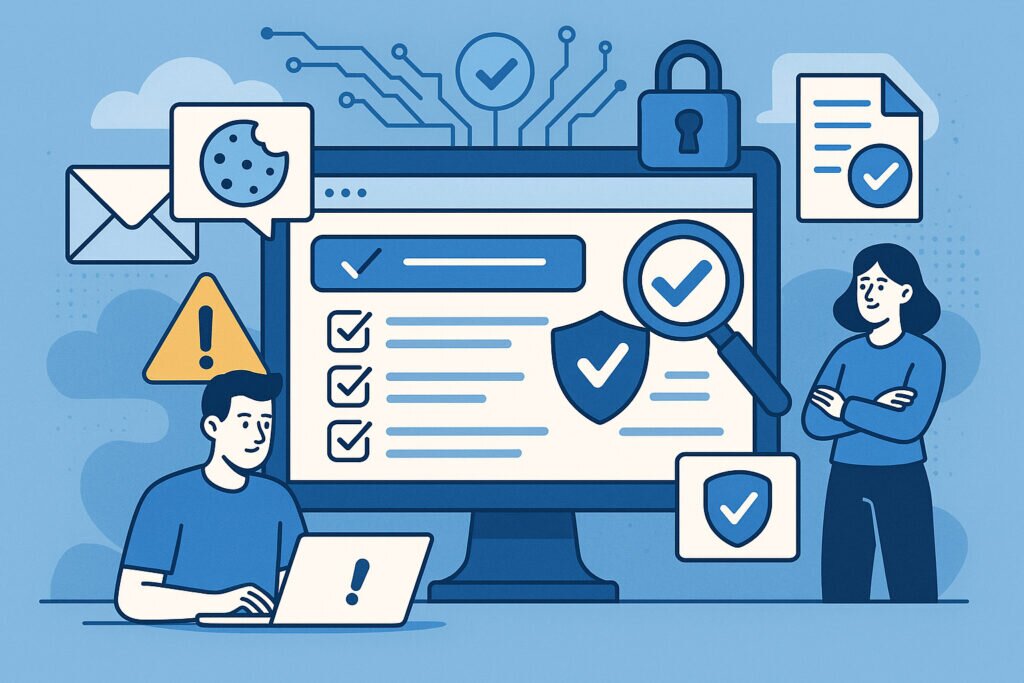
If you’re running a business website, compliance probably feels like one of those necessary evils – something you deal with once during launch and hope never to think about again. I get it. Between managing your actual business, dealing with customer service, and keeping your site updated with fresh content, who has time to constantly check if your privacy policy is still accessible or your cookie consent banner is working correctly?
But here’s the uncomfortable truth I’ve learned after watching several businesses get hit with completely avoidable fines: treating compliance as a one-time checkbox exercise is exactly how you end up paying exponentially more down the road. Let me explain why continuous monitoring isn’t just another expense to justify – it’s actually one of the smartest investments you can make.
The Real Cost of Compliance Failures
GDPR fines can reach up to 4% of your annual global turnover or €20 million, whichever is higher. Even if you’re not operating at that scale, regional data protection authorities regularly issue five-figure fines to small and medium-sized businesses for violations that often stem from simple oversights.
But the financial damage goes beyond regulatory penalties. A few years back, I consulted with an e-commerce company that discovered their cookie consent mechanism had stopped working properly after a routine WordPress update. For three months, they were technically collecting user data without proper consent. Once they realized it, they had to halt their email marketing campaigns, notify affected users, and bring in legal counsel. The direct costs exceeded €15,000, but the real damage was the customer trust they lost and the conversion rate drop that followed.
Why Compliance Issues Happen More Often Than You Think
Your website isn’t static. Every plugin update, theme change, or content management system modification carries the risk of breaking something compliance-related. I’ve seen privacy policy pages accidentally deleted during site migrations, SSL certificates expire because nobody was tracking renewal dates, and security headers get misconfigured during server updates.
The problem is that these failures are invisible until someone – usually a regulator or an angry customer – points them out. Your site can look perfectly functional while simultaneously violating multiple compliance requirements. That cookie banner might display beautifully on your screen but fail to load on mobile devices. Your privacy policy link might work in your testing environment but return a 404 error for actual visitors.
The Hidden Costs Everyone Overlooks
When people calculate compliance costs, they typically only consider the obvious expenses: legal fees for drafting policies, development time for implementing cookie consent, or licensing costs for security certificates. What they miss are the opportunity costs and productivity drains.
Manual compliance checking is incredibly time-consuming. If you’re doing it properly, you need to regularly verify that every required document is accessible, every consent mechanism functions correctly, all security configurations remain intact, and accessibility statements stay current with your actual site features. For a comprehensive check, this easily consumes several hours monthly – time your team could spend on revenue-generating activities.
Then there’s the cost of uncertainty. Without continuous monitoring, you’re essentially flying blind, never quite sure if your site is compliant at any given moment. This uncertainty often leads to overcautious business decisions, delayed feature launches, or excessive legal consultation fees simply because you lack confidence in your current compliance status.
How Automated Monitoring Changes the Economics
Automated compliance monitoring flips the entire cost structure. Instead of dedicating staff hours to repetitive manual checks, you deploy systems that work around the clock, catching issues immediately rather than weeks or months after they occur.
The financial logic is straightforward. A comprehensive monitoring service typically costs less than a single hour of legal consultation per month, yet it provides continuous oversight that would require dozens of manual work hours to replicate. More importantly, it catches problems before they become expensive violations.
When an SSL certificate is about to expire, you get advance warning instead of discovering it when customers start seeing security warnings. When a site update accidentally removes your privacy policy, you know within minutes rather than when a regulator sends an inquiry. When a third-party script starts setting cookies without proper consent, you can address it immediately.
The Preventive Advantage
The biggest money-saving aspect of continuous monitoring isn’t avoiding fines – it’s preventing the operational disruptions that compliance failures cause. When you discover a violation months after it occurred, your remediation options are limited and expensive. You might need to notify thousands of users, pause marketing activities, or rebuild significant portions of your site architecture under time pressure.
Early detection transforms these crises into manageable tasks. A quick policy update, a consent mechanism fix, or a security header adjustment takes minutes when caught immediately but can become a multi-day emergency response when discovered late.
Building Long-Term Value
Beyond immediate cost savings, compliance monitoring builds equity in your business. A documented history of proactive compliance management becomes valuable during acquisitions, investment rounds, or partnership negotiations. It demonstrates operational maturity and reduces the risk profile of your business.
For growing businesses, this matters more than many realize. Due diligence processes increasingly scrutinize digital compliance practices, and a track record of continuous monitoring can expedite deals and improve valuations.
Is It Worth It for Your Business?
If your website processes personal data, accepts payments, or operates in regulated industries, automated compliance monitoring isn’t optional – it’s risk management 101. The question isn’t whether you can afford to implement it, but whether you can afford not to.
Calculate what a single compliance failure would cost your business: regulatory fines, legal fees, remediation costs, business interruption, and reputation damage. In most cases, that number will dwarf the annual cost of comprehensive monitoring by a factor of ten or more. That’s not marketing hyperbole – that’s just realistic math about modern business operations.