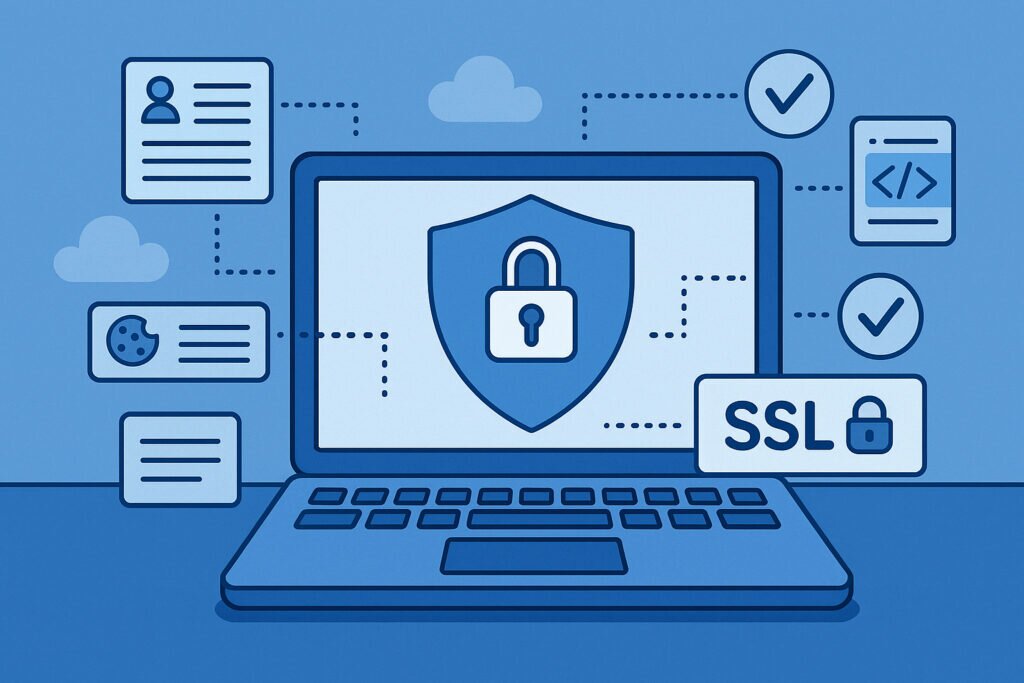
I learned this lesson the hard way about five years ago. A client’s e-commerce site went down on a Friday evening—not because of a server failure or a cyberattack, but because their SSL certificate expired. The result? Their payment processor immediately suspended transactions, customers flooded their support lines, and by Monday morning, they were facing potential GDPR fines for processing payments without proper encryption. That single oversight cost them roughly €15,000 in lost revenue and emergency fixes. SSL certificate monitoring could have prevented this compliance disaster entirely with a simple automated alert.
The Hidden Compliance Risks Behind Expired SSL Certificates
Most business owners think of SSL certificates purely as a technical requirement, but from a compliance perspective, they’re much more critical. When an SSL certificate expires or becomes invalid, you’re potentially violating multiple regulatory frameworks simultaneously.
Under GDPR, organizations must implement “appropriate technical measures” to protect personal data. An expired SSL certificate means data transmitted between your users and your servers is no longer encrypted—a direct breach of this requirement. The Information Commissioner’s Office has been clear that inadequate encryption can result in fines up to 4% of annual global turnover.
PCI DSS requirements are even more explicit. Requirement 4.1 mandates strong cryptography for transmitting cardholder data across open networks. An expired certificate means you’re failing this requirement, which can result in your payment processor suspending your merchant account—often without warning. The full scope of SSL expiration risks goes well beyond a simple browser warning.
Why Manual Certificate Tracking Fails
I’ve seen countless companies rely on spreadsheets or calendar reminders to track their SSL certificates. This approach works fine when you’re managing one or two domains, but it breaks down quickly as your digital footprint grows.
The problem compounds when different team members handle different domains, certificates get issued through various providers, or the person who set up the original reminder has moved on. I recently worked with a company that discovered they had 23 active domains, but only 11 were on anyone’s tracking list. The hidden costs of manual compliance checking add up fast when you factor in the labor, the gaps, and the risk.
Certificate authorities send renewal reminders, but these emails often go to technical addresses that aren’t monitored properly, or they get buried in spam filters. By the time someone notices, you’re already in breach.
The Real-Time Monitoring Advantage
Automated SSL monitoring isn’t just about convenience—it’s about building a robust compliance safety net. Modern monitoring systems check your certificates multiple times per day, validating not just expiration dates but also certificate chain integrity, encryption strength, and proper implementation.
This matters because compliance isn’t binary. A certificate might be technically valid but implemented incorrectly—using deprecated protocols like TLS 1.0 or configured to accept weak cipher suites. These issues might not prevent your site from loading, but they still constitute compliance violations under frameworks like NIST or ISO 27001. The ability to catch compliance issues before customers do is what separates proactive organizations from reactive ones.
When I implemented automated monitoring for a client portfolio, we discovered that roughly 30% of sites had some form of SSL-related issue that manual checks had missed—expired intermediate certificates, protocol vulnerabilities, or certificates expiring within 14 days.
Multi-Domain Compliance Management
Organizations rarely operate from a single domain anymore. You’ve got your main website, subdomain applications, separate domains for different markets, and various API endpoints. Each needs its own valid certificate, and each represents a potential compliance failure point.
The challenge intensifies with wildcard or multi-domain certificates. These can create a false sense of security—you think one certificate covers everything, but misconfigurations or partial coverage can leave gaps. Automated monitoring identifies these gaps by testing each subdomain and endpoint individually.
Building an Audit Trail
Compliance isn’t just about being compliant today—it’s about proving you’ve been compliant over time. When auditors come knocking, you need detailed records.
Automated SSL monitoring creates this audit trail automatically. Every check generates a timestamped record showing certificate status, validation results, and issues detected. You can demonstrate that proper monitoring was in place and answer the question every auditor asks: “When did you first become aware of this issue, and what did you do about it?”
Integration With Broader Compliance Strategy
SSL monitoring shouldn’t exist in isolation. The same system that tracks your certificates should integrate with your broader compliance monitoring—cookie consent implementations, privacy policy accessibility, and security headers that regulators look for.
This integrated approach means you’re not just preventing SSL disasters but building comprehensive visibility into your compliance posture. When everything feeds into a single dashboard with centralized alerting, nothing falls through the cracks.
Frequently Asked Questions
How often should SSL certificates be monitored for compliance purposes?
At minimum, certificates should be checked daily, but best practice is multiple times per day. Compliance frameworks don’t specify exact intervals, but demonstrating frequent, automated checks shows due diligence. Monitoring should cover expiration dates, chain validity, protocol strength, and cipher suite configuration—not just whether the certificate exists.
Can an SSL certificate issue really lead to GDPR fines?
Yes. GDPR Article 32 requires “appropriate technical and organisational measures” to ensure data security, and encryption is explicitly mentioned. An expired or misconfigured SSL certificate means user data is transmitted without proper encryption. While regulators typically consider the full context—including how quickly you responded—the risk is real, especially if personal or payment data was exposed during the lapse.
What’s the difference between monitoring SSL expiration and monitoring SSL compliance?
Expiration monitoring only checks whether a certificate is still valid by date. Compliance monitoring goes much deeper: it verifies the full certificate chain, checks for deprecated protocols like TLS 1.0 or 1.1, validates cipher suite strength, and ensures proper HSTS implementation. A certificate can be unexpired yet still non-compliant if the underlying configuration is weak.