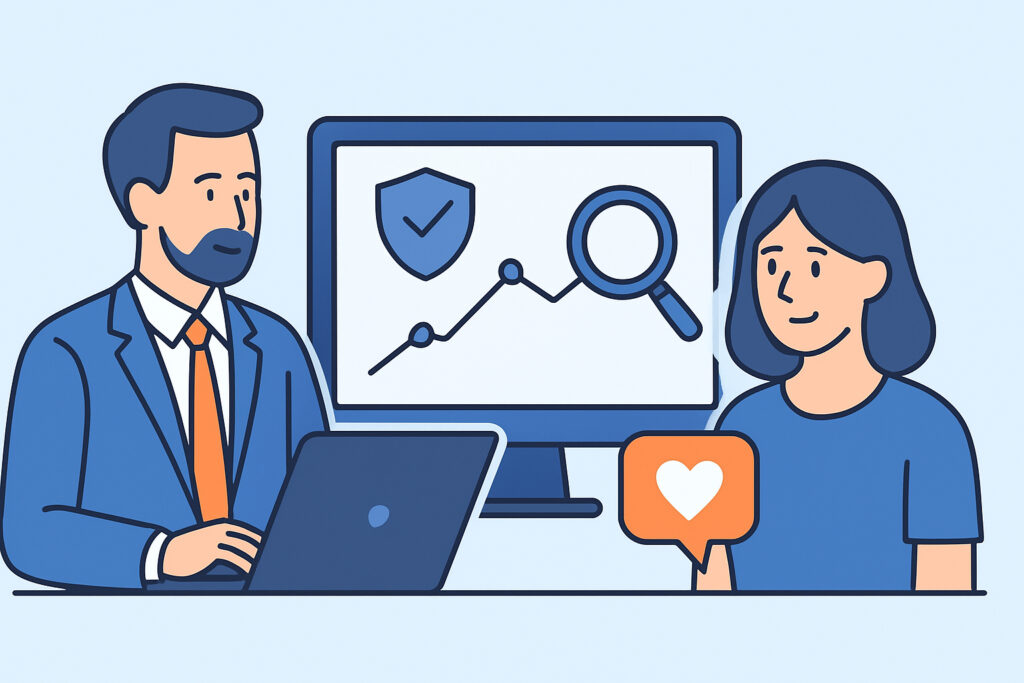
Continuous monitoring creates a foundation of trust that customers can sense even when they don’t explicitly look for compliance indicators. When businesses maintain consistent oversight of their website’s legal, security, and accessibility requirements, they signal reliability and professionalism that translates directly into customer confidence and loyalty.
Trust isn’t built through grand gestures – it develops through consistent, reliable experiences. Every interaction a customer has with your website either reinforces or undermines their confidence in your business. A missing privacy policy, broken cookie consent, or expired SSL certificate might seem like minor technical issues, but they create doubt about your attention to detail and commitment to customer protection.
The Psychology Behind Digital Trust Signals
Customers make split-second judgments about website credibility, often without conscious awareness of what influenced their decision. A properly functioning secure connection, accessible legal documents, and transparent data handling practices create subconscious confidence markers that encourage engagement and conversion.
Research consistently shows that trust indicators directly impact purchasing decisions. When customers see consistent security warnings, encounter broken functionality, or can’t find essential legal information, they question whether the business can deliver on its promises. These micro-experiences accumulate into overall brand perception.
Consider a scenario where an e-commerce site’s SSL certificate expires during peak shopping season. Browsers immediately display security warnings, customers abandon their carts, and word spreads through social media about the “unsafe” website. The technical issue gets resolved within hours, but the trust damage persists for months.
The reverse scenario demonstrates continuous monitoring’s value. When automated systems detect and alert about an SSL certificate set to expire in 30 days, the renewal happens seamlessly. Customers never experience disruption, never see warning messages, and continue trusting the brand’s reliability.
Building Consistency Through Automated Oversight
Manual compliance checking creates inevitable gaps in oversight. Even the most diligent teams can’t monitor every aspect of website compliance around the clock. Real-time monitoring systems eliminate these gaps by providing continuous surveillance across all compliance dimensions.
Consistency builds trust more effectively than perfection. Customers prefer businesses that maintain steady, reliable standards over those that oscillate between excellence and neglect. Continuous monitoring ensures that compliance standards remain constant regardless of staff changes, workload fluctuations, or technical updates.
Website updates frequently introduce unintended compliance issues. A new plugin might interfere with cookie consent functionality. A design change could make legal documents less accessible. Server migrations sometimes break SSL configurations. Without continuous monitoring, these issues persist until someone manually discovers them – often after customers have already been affected.
Automated oversight catches these problems immediately. When cookie consent monitoring detects that the consent banner stopped recording user preferences, or when SSL monitoring identifies certificate chain problems, remediation can begin before customer trust erodes.
Transparency as a Trust Multiplier
Many businesses treat compliance as a checkbox exercise – something to complete and forget. This approach misses the opportunity to use compliance transparency as a competitive advantage. When customers see that a business takes data protection, security, and accessibility seriously, they feel more comfortable sharing personal information and making purchases.
Visible compliance signals include properly implemented cookie consent banners, easily accessible privacy policies, clear terms of service, and obvious security indicators. But visibility alone isn’t enough – these elements must function correctly and remain available consistently.
One common misconception suggests that drawing attention to compliance measures makes businesses appear overly legalistic or defensive. In reality, transparent compliance practices signal professionalism and customer-first thinking. Businesses that openly address privacy, security, and accessibility demonstrate respect for customer rights and concerns.
The Cost of Compliance Gaps on Customer Relationships
Trust erosion happens faster than trust building. A single compliance failure can overshadow months of positive customer experiences. When privacy policies become inaccessible, when essential legal documents disappear, or when security headers weaken without notice, customers lose confidence in the business’s reliability.
Customer service teams frequently field questions about website security, data handling, and accessibility – questions that well-maintained compliance infrastructure can answer proactively. When compliance elements work correctly and remain consistently available, customer concerns decrease and satisfaction increases.
The financial impact extends beyond immediate sales. Customers who lose trust in a business’s digital reliability often share their concerns with others, creating negative word-of-mouth that damages acquisition efforts. Conversely, customers who consistently find the information they need and feel confident about security become advocates for the brand.
Measuring Trust Through Continuous Monitoring Metrics
Continuous monitoring provides measurable indicators of trust-building progress. Uptime statistics for legal documents, SSL certificate health scores, and accessibility compliance levels create objective benchmarks for customer confidence infrastructure.
Response time matters significantly in trust building. When compliance issues get detected and resolved within minutes rather than days or weeks, the customer impact shrinks dramatically. Businesses that can demonstrate 99.9% uptime for privacy policies, consistently functional cookie consent systems, and proactive SSL certificate management create powerful trust differentiation.
These metrics also help identify patterns that might undermine trust building. If cookie consent failures spike after certain types of website updates, or if accessibility issues correlate with specific content management practices, continuous monitoring data reveals these relationships and enables preventive solutions.
Frequently Asked Questions
How quickly does continuous monitoring detect compliance issues?
Most automated monitoring systems check compliance status every few minutes, detecting issues within 5-10 minutes of occurrence. This rapid detection enables response times measured in minutes rather than hours or days, minimizing customer exposure to compliance problems.
Can customers actually notice the difference between monitored and unmonitored websites?
While customers might not consciously identify specific monitoring practices, they definitely notice the results – consistent functionality, reliable access to legal information, and absence of security warnings. These positive experiences accumulate into stronger trust and higher conversion rates.
What compliance elements have the biggest impact on customer trust?
SSL security, privacy policy availability, and cookie consent functionality rank as the most visible trust indicators. However, the consistency of all compliance elements matters more than perfection in any single area.
Making Monitoring a Strategic Trust Investment
Continuous monitoring transforms compliance from a defensive necessity into a strategic trust-building tool. When businesses maintain consistent oversight of their legal, security, and accessibility requirements, they create a foundation of reliability that customers can sense and appreciate.
The investment in automated monitoring pays dividends through improved customer confidence, reduced support inquiries, and stronger brand reputation. Most importantly, it ensures that trust-building happens continuously, not just during scheduled compliance reviews or after problems occur.