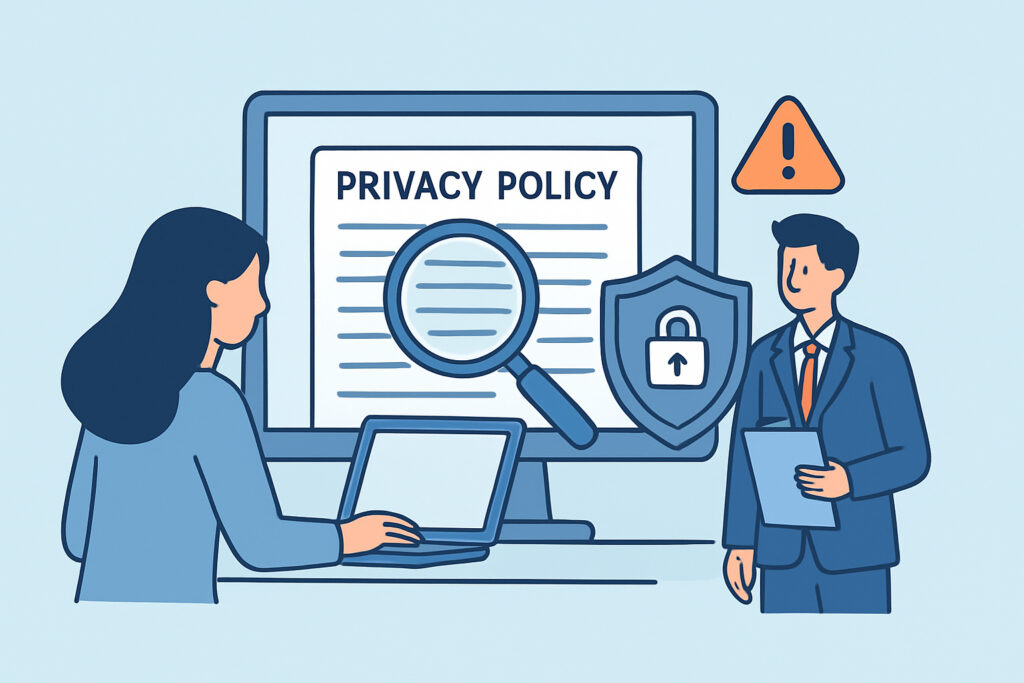
Privacy policy monitoring represents a critical gap in many organizations’ compliance strategies. Most businesses check their privacy policies during implementation but fail to continuously verify they remain accessible, functional, and legally compliant as their websites evolve.
Website compliance demands constant vigilance, particularly for privacy policies that serve as legal foundations for data processing activities. A single server error, content management system update, or developer oversight can render these essential documents inaccessible – creating immediate regulatory exposure.
The Real Cost of Privacy Policy Oversights
Privacy policy failures carry steep penalties under GDPR, CCPA, and other data protection frameworks. European regulators have issued fines exceeding €20 million for privacy policy violations, while California’s CCPA enforcement actions frequently cite inadequate or inaccessible privacy notices.
Consider a mid-sized e-commerce company that discovered their privacy policy had been returning 404 errors for three weeks following a website redesign. During this period, they processed thousands of customer orders without providing legally required privacy information. The resulting regulatory investigation, legal fees, and reputational damage cost significantly more than implementing proper monitoring would have required.
Beyond regulatory fines, privacy policy oversights damage customer trust. When users cannot access privacy information, they question whether the business takes data protection seriously. This skepticism directly impacts conversion rates and brand reputation.
Common Privacy Policy Monitoring Mistakes
Many compliance teams rely on manual spot-checks or basic uptime monitoring that misses critical issues. Standard website monitoring tools verify that pages load but cannot detect whether privacy policies contain required legal elements or function correctly across different user scenarios.
A widespread misconception assumes that if a privacy policy appears visually correct, it meets compliance requirements. In reality, technical problems frequently prevent users from accessing these documents while maintaining the appearance of functionality. Search engine crawlers might access the policy successfully while regular visitors encounter broken links or loading errors.
Content management systems often break internal links during updates, redirecting privacy policy URLs to generic error pages. These failures typically go unnoticed for days or weeks without dedicated monitoring systems in place.
Privacy Policy Monitoring Requirements
Effective privacy policy monitoring extends beyond simple availability checking. Compliance teams must verify that policies remain accessible via multiple pathways, including footer links, cookie consent banners, and data collection forms.
Modern privacy regulations require specific policy elements that monitoring systems should verify continuously. GDPR mandates clear information about data processing purposes, legal bases, retention periods, and individual rights. CCPA requires detailed disclosures about personal information categories, sources, and sharing practices.
Technical monitoring should verify that privacy policies load correctly across different devices, browsers, and network conditions. Mobile users, in particular, often encounter accessibility issues that desktop testing misses entirely.
Essential Elements to Monitor Continuously
Privacy policy monitoring must encompass multiple technical and content-related factors. Link integrity represents the most basic requirement – ensuring that all pathways to the privacy policy function correctly from every page where they appear.
Page loading speed affects legal compliance since unreasonably slow-loading policies may not satisfy regulatory requirements for accessible privacy information. Monitoring systems should track loading times and alert teams when performance degrades beyond acceptable thresholds.
Content verification ensures that policies contain required legal elements and haven’t been corrupted during website updates. This includes checking for proper formatting, readable fonts, and complete text rendering across different platforms.
Legal document availability requires constant surveillance because failures can occur at any time due to server issues, configuration changes, or third-party service disruptions.
Implementing Automated Privacy Policy Surveillance
Manual privacy policy checking cannot scale with modern business requirements. Organizations need automated systems that continuously verify policy accessibility and functionality without consuming internal resources.
Automated monitoring should test privacy policy access from multiple geographic locations and network conditions. International businesses must ensure their policies remain accessible to users worldwide, accounting for regional internet infrastructure variations.
Integration with existing compliance workflows allows teams to respond quickly when issues arise. Real-time monitoring systems should provide immediate notifications when privacy policies become inaccessible or malfunction.
Technical monitoring should verify that privacy policies integrate correctly with cookie consent systems and data collection forms. Many compliance failures occur when these systems become disconnected during website updates.
Responding to Privacy Policy Failures
When privacy policy monitoring detects issues, rapid response protocols minimize regulatory exposure and customer impact. Teams should establish clear escalation procedures that activate immediately upon detecting failures.
Documentation proves essential for regulatory inquiries about privacy policy availability. Monitoring systems should maintain detailed logs showing when policies functioned correctly and how quickly teams resolved any issues.
Backup accessibility measures help maintain compliance during primary system failures. Some organizations implement secondary privacy policy hosting or cached versions that activate automatically during outages.
Frequently Asked Questions
How often should privacy policies be monitored for accessibility?
Privacy policies require continuous monitoring rather than periodic checks. Automated systems should verify accessibility every few minutes since failures can occur at any time due to server issues, configuration changes, or third-party service disruptions.
What specific technical elements should privacy policy monitoring cover?
Comprehensive monitoring should verify link integrity from all website locations, page loading speeds, content completeness, mobile accessibility, and integration with cookie consent systems. Monitoring should also check that policies remain accessible across different browsers and geographic locations.
Can basic website uptime monitoring adequately protect privacy policy compliance?
Standard uptime monitoring provides insufficient protection since it typically checks only that web servers respond to requests. Privacy policy compliance requires verifying that policies actually load correctly for users, contain required content, and integrate properly with data collection systems.
Privacy policy monitoring transforms from a compliance afterthought into a business-critical function as regulatory enforcement intensifies. Organizations that implement comprehensive monitoring systems protect themselves from costly oversights while demonstrating their commitment to transparent data handling practices.